
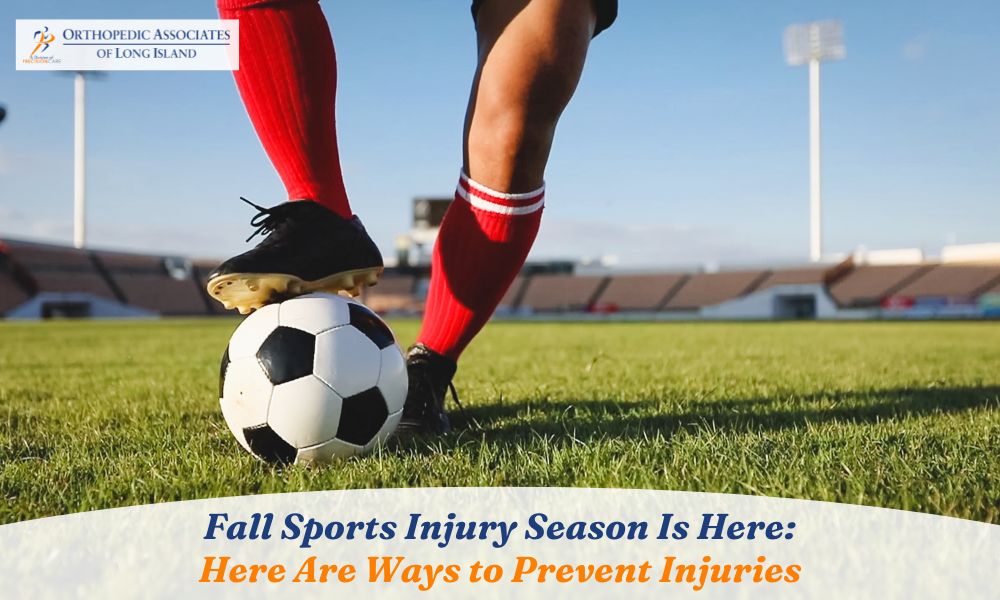
As cooler weather arrives and fall sports ramp up across Long Island, athletes at all levels are at risk for common injuries. At Orthopedic Associates of Long Island (OALI), our team is committed to helping you stay in the game safely. Below are practical strategies we recommend to reduce the risk of injury this fall season.
1. Preseason Preparation & Gradual Training
Each preseason (and even mid-season) preparation should include a warm-up, strength and flexibility work, and sport-specific conditioning. Start gradually — don’t ramp intensity or volume too quickly. Focus especially on the muscle groups and joints most stressed in your sport (e.g., hips, knees, ankles, shoulders). Balanced strength, core stability, and neuromuscular control are key.
2. Proper Technique & Movement Mechanics
Incorrect form or poor mechanics are a frequent cause of injuries. Whether you’re throwing, cutting, jumping, or tackling, ensure your movement patterns are sound. Coaches, trainers, or OALI specialists can analyze biomechanics and offer corrections to avoid undue stress on joints and soft tissues.
3. Appropriate Footwear & Equipment
Worn-out shoes, improper cleats, or ill-fitting protective gear can increase your risk of injury. Inspect all equipment regularly. Replace shoes or cleats when the cushioning or grip has degraded. Use braces, straps, or supports when recovering from past injuries or when extra stability is needed.
4. Warm-Up, Cool-Down & Mobility Work
A dynamic warm-up before activity primes muscles and joints for exertion; a structured cool-down (including stretching and mobility drills) helps facilitate recovery. Incorporate flexibility and mobility exercises into your daily routine to keep your joints resilient to stress.
5. Cross-Training & Rest Days
Avoid overuse by mixing in alternative forms of movement (swimming, cycling, yoga) to distribute load across different muscle groups. Schedule rest days and avoid consecutive high-risk sessions. Listen to your body — soreness turning into pain may signal the need to back off.
6. Gradual Return After Injury
If you’re coming back from a prior injury, progress slowly. Resuming full intensity too quickly often leads to recurrence. Use stepwise return-to-play protocols, monitor symptoms, and seek guidance if pain persists.
7. Early Attention to Pain & Warning Signs
Don’t “play through” persistent pain or discomfort. Early assessment and intervention may prevent small injuries from becoming larger ones. OALI’s non-operative sports medicine and orthopedic teams are ready to evaluate and treat aches, strains, and tendon irritation before they worsen.
8. Regular Monitoring & Preventive Check‑Ins
Even when feeling good, periodic check-ins with trainers, therapists, or OALI providers can catch emerging imbalance, tightness, or weakness patterns before they lead to injury. Proactive screening is a strategy we support across sports seasons.
Stay Active, Stay Safe
Fall is a great season for sport — but injuries can derail progress and enjoyment. With thoughtful preparation and commitment to injury prevention, you’ll maximize your chances of a strong, healthy season.
When you need expert orthopedic and sports medicine support, OALI is here for you. Request an appointment today.
When you need expert orthopedic and sports medicine support, OALI is here for you. Request an appointment today.